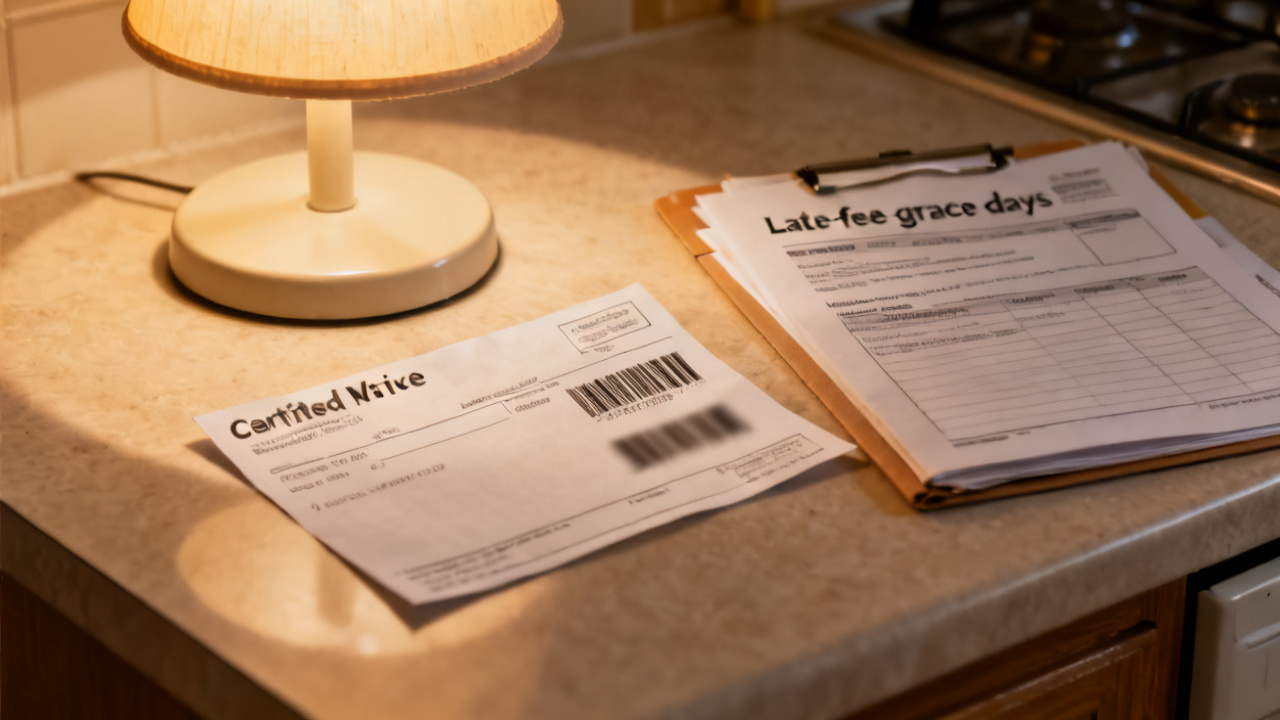
The grace-day clause card clearly states allowed late-fee waiver periods for eligible consumer loan account holders. It is a standardized insert included with most personal loan and structured settlement payment loan closing packets, designed to eliminate ambiguity around when a late payment will trigger penalty fees. All printed terms on the card supersede verbal communications from servicer support teams unless formally amended in writing, and borrowers are advised to review the full card before signing closing documents to confirm they understand their applicable grace period terms.
Settlement Desk
Signature Block Placement for Grace-Day Clause Card Recordkeeping
All signature fields on the grace-day clause card are required to be placed 0.75 inches below the final printed grace period term line, left-aligned, with no overlapping text or handwritten marks in the designated signature zones. Three signature lines are included as standard: one for the primary borrower, one for any co-borrower or co-signer on the account, and one for the authorized loan servicer representative. All signatories must date their signature on the line directly to the right of their signature, with dates matching the day the closing documents are executed. Any handwritten edits to printed grace period terms must be initialed by all three signatories directly adjacent to the edit to be considered valid; uninitialed edits are not enforceable under state lending rules. Settlement Desk teams may reference this signature block when processing formal payment discrepancy requests submitted by borrowers or their authorized representatives. Servicers are required to return a fully executed copy of the card to the borrower within 10 business days of closing.
Printed Header Text Outlining Approved Late-Fee Grace Windows
The header of every grace-day clause card is printed in 14-point bold sans-serif font, centered at the top of the card below the pre-filled loan account number and borrower full name fields. All header text is pre-vetted for compliance with state lending regulations in the state where the loan is originated, and may not be modified without prior written approval from the relevant state regulatory body. The header clearly defines core terms related to grace period eligibility, applicable loan types, and late fee caps for payments submitted after the grace window expires. The table below outlines standard printed header lines and corresponding terms for common consumer loan products:
| Header Line Number | Printed Text | Applicable Loan Type | Grace Window Duration | Late Fee Cap If Grace Period Is Exceeded |
|---|---|---|---|---|
| 1 | Grace Period Terms Apply to All Scheduled Monthly Payments | Unsecured Personal Loan | Illustrative example: 7 calendar days | Illustrative example: 5% of missed payment amount or $25, whichever is lower |
| 2 | Grace Period Excludes Weekend and Federal Holiday Processing Delays | Secured Structured Settlement Loan | Illustrative example: 15 calendar days | Illustrative example: 3% of missed payment amount or $50, whichever is lower |
| 3 | Grace Period Does Not Extend Subsequent Payment Due Dates | Debt Consolidation Personal Loan | Illustrative example: 10 calendar days | Illustrative example: 4% of missed payment amount or $35, whichever is lower |
| 4 | First Payment Grace Period Eligibility Requires No Prior Late Payments | Credit Builder Personal Loan | Illustrative example: 12 calendar days | Illustrative example: 2.5% of missed payment amount or $20, whichever is lower |
Borrowers are advised to cross-reference the header text with their promissory note to confirm alignment, and raise any discrepancies with their servicer before signing closing documents.

Clause Card Pocket Storage for Signed Grace Term Confirmations
After execution, the original signed grace-day clause card is to be stored in the dedicated 4×6 inch clear plastic pocket on the inside back cover of the borrower’s closing document binder, separate from the promissory note, payment schedule, and disclosure documents to ensure quick access during payment disputes. A high-resolution scanned copy of the fully executed card should be saved to the borrower’s encrypted personal cloud storage account, with a file name following the format [Account Number]_[Last Name]_Grace_Clause_Card_[Year of Closing] for easy searchability. For servicers, the signed card is stored in the core document folder for the loan account, tagged with searchable metadata for grace period duration and eligibility rules to reduce dispute resolution timelines. Borrowers should retain both physical and digital copies of the card for a minimum of 3 years after the final loan payment is posted to their account, to resolve any post-payoff credit reporting discrepancies related to incorrectly applied late fees.
Grace Period Tracking Column for Eligible Late Payment Entries
All borrowers are advised to add a dedicated “Grace Period Used” column to their personal payment tracker spreadsheet or physical payment ledger to document payments submitted within the applicable grace window. Entries in this column should include the date the payment was submitted, the date the payment was posted to the account, and the payment confirmation number provided by the servicer or payment processor. For example, if a payment is due on the first of the month and the borrower submits the payment on the 5th with a 7-day grace window, the entry would read “Paid 05/03/2024, posted 06/03/2024, confirmation #789012, within 7-day grace period” to create a clear paper trail if the servicer incorrectly flags the payment as late. Most servicers also include a matching grace period tracking column in their internal account ledgers, and borrowers can cross-reference their personal entries with the monthly account statement to ensure consistency. If a mismatch is identified, borrowers can submit a copy of their signed grace-day clause card and payment confirmation to their servicer to resolve the error within 10 business days.
Late Fee Exemption Box Marking Steps for Qualifying Borrowers
A pre-printed late fee exemption box is included on the bottom right corner of every grace-day clause card, for use by borrowers who qualify for extended grace periods or permanent late fee exemptions under state or federal lending rules, including active military service, documented long-term medical hardship, or state-mandated disaster relief eligibility. To mark the box and request approval for the exemption, follow these four steps: first, gather all required supporting documentation for your eligibility category, such as active duty military orders, a signed hardship letter from a licensed medical provider, or a federal disaster declaration for your county of residence. Second, check the exemption box on the front of the clause card, write your eligibility category on the line directly next to the box, and date the entry. Third, submit the updated clause card and supporting documentation to your loan servicer through their secure online portal or certified mail for formal review. Fourth, once the servicer approves the request and signs the updated clause card, store the new version in your closing document binder and save an updated digital copy for your records. Approved exemptions are applied retroactively to any late fees incurred during your eligibility period, and a credit for those fees will be posted to your account within 15 business days of approval. This page cannot approve exemption requests, all submissions must be reviewed by your loan servicer or a licensed financial professional as applicable.
Locate your signed grace-day clause card in your closing document folder within the next 7 days to confirm your applicable grace window and cross-reference it with your next monthly loan statement.