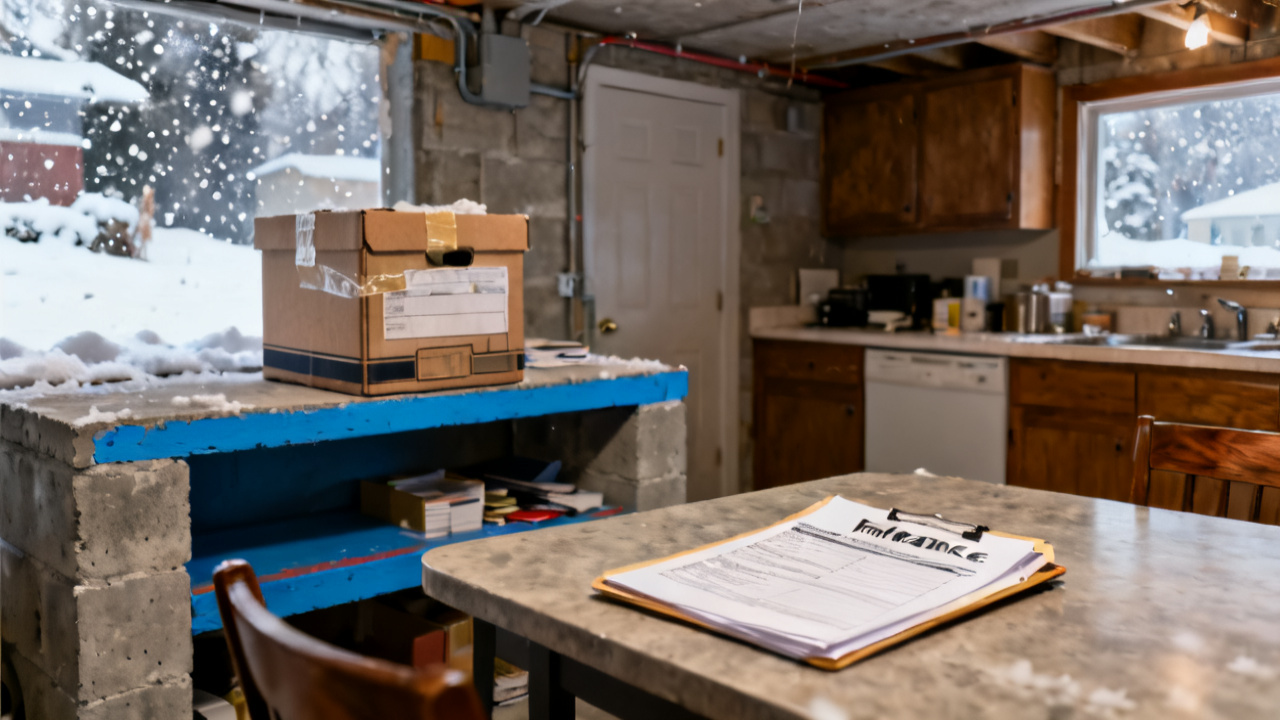
This refinance keep-page checklist identifies all old note documents to retain in your official refinance folder. It eliminates guesswork about which pages can be discarded after closing and which you will need for future tax filing, payment disputes, or future financing applications. You do not need to retain every single page from your original loan closing packet, only the verified records that confirm your payment history, original loan terms, and discharge of the old obligation. Settlement Desk publishes these guidance pages to help borrowers organize personal loan records without requiring third-party document preparation support.
Settlement Desk

Old note closing form copies to prioritize for retention
The first set of documents to add to your refinance folder comes directly from your original loan closing packet. First, retain a fully executed copy of the original closing disclosure, which lists all origination fees, discount points, and prepaid expenses paid at closing; this document may be required to verify eligible tax deductions for mortgage interest or points, if applicable to your loan type. Second, keep your signed original promissory note, which outlines the core loan terms including original principal balance, interest rate structure, repayment timeline, and late fee policies, as you will need this to cross-reference any payoff calculation discrepancies from your old servicer. Third, retain a copy of the recorded deed of trust or mortgage agreement, if your loan is secured by real property, to confirm the lien position of the old loan and verify it is formally released after refinance. Fourth, add any signed loan modification agreements or forbearance documents you entered into during the life of the old loan, as these adjust your official loan terms and will be required to prove the final payoff amount was calculated correctly. You should store both a scanned, password-protected digital copy of each form and a physical hard copy to mitigate risk of loss from data breaches or physical damage.
Refinance folder storage box organization best practices
Proper organization of your refinance folder storage box ensures you can locate required documents in minutes if you need to resolve a dispute, file amended tax returns, or apply for future financing. First, use a waterproof, fire-resistant portable file box rated for document storage, and avoid mixing old loan paperwork with unrelated household bills, medical records, or other personal documents to reduce sorting time. Label the exterior of the box clearly with the old loan account number, property address (if the loan is secured by real estate), loan type, and refinance closing date to avoid mixing it with other financing folders you may hold. Organize internal contents in chronological order, with original closing forms at the front, followed by payment history records, then payoff confirmation documents, and finally new refinance closing forms at the back. Use color-coded file folders to separate document categories: assign blue folders for old note closing forms, green folders for payment history records, yellow folders for payoff confirmation materials, and red folders for new refinance closing documents. Keep a printed index sheet at the very front of the box that lists every document included, its issue date, and a one-sentence description of its purpose, so you do not have to sort through full packets to find a specific record. Illustrative example: if you refinanced an unsecured personal loan used for home renovations in 2023, you would label the box “Personal Loan Refinance 2023, Account # 729461, Home Renovation Funds” to distinguish it from a separate auto loan refinance folder from the same year.
Payment schedule printed excerpt requirements for your file
You do not need to retain every monthly statement from the full life of your old loan, only specific excerpts that confirm your payment history aligns with your servicer’s official payoff calculation. The below checklist outlines required excerpts, verification criteria, retention timelines, and acceptable formats:

| Document Excerpt | Required Information to Verify | Retention Period | Acceptable Format |
|---|---|---|---|
| First 3 months of old loan payment history | Original principal balance applied, first payment due date, initial escrow amount (if applicable) | 7 years from refinance closing date | Printed lender statement or CSV export saved as password-protected PDF |
| Full 12-month payment history preceding refinance application | All on-time/late payment flags, amount applied to principal vs interest vs fees, escrow balance adjustments (if applicable) | 10 years from refinance closing date | Official lender portal printout with account number and servicer logo visible |
| Final 3 months of payment history before payoff | Outstanding principal balance as of 30 days pre-payoff, any pending fees, final payment amount applied | Permanent retention | Notarized payoff statement from old servicer + cleared bank record of final payment |
| Modification period payment history (if applicable) | Adjusted monthly payment amount, principal forbearance amounts (if any), updated maturity date | Permanent retention | Signed modification agreement + corresponding monthly statements for the full modification term |
| Escrow account annual disbursement records (if applicable) | Amount paid for property taxes/insurance, overpayment/underpayment adjustments, escrow balance at payoff | 7 years from refinance closing date | Official escrow account annual statement from servicer |
All printed excerpts must include your full legal name, old loan account number, and servicer contact information to be considered valid for future disputes or tax-related requests. If you used automatic payments for the old loan, add a copy of your bank transaction history for the final 6 months of the loan to cross-reference payment amounts posted by your servicer.
Promissory note coupon sheet pages you should never discard
If you received a physical payment coupon book (also called a promissory note coupon sheet) at your original loan closing, specific pages from this book are required to keep even if you never used the coupons to submit payments. The first page of the coupon book, which lists your full loan terms, account number, servicer mailing address, and official late payment fee structure, should be retained permanently as a secondary record of your original loan agreement. Any coupon pages corresponding to months where you had a payment discrepancy, partial payment, forbearance arrangement, or modification adjustment should be retained to cross-reference against your bank records and servicer statements if a future dispute arises. If you paid off your old loan early, keep the final coupon that lists the expected payoff amount as of your payoff date, to confirm the servicer did not charge you unauthorized extra fees or incorrect accrued interest. You may safely discard unused coupons for months after your official payoff date, as well as coupons for months where you have no recorded payment disputes and your servicer statement matches your bank payment records exactly. Illustrative example: if you submitted a partial payment in June 2022 due to a temporary furlough, you would keep the June 2022 coupon, your bank record of the partial payment, and your servicer’s written confirmation that the partial payment was accepted, to resolve any future claims of missed payments for that month.
Lender confirmation letter filing steps for easy future access
The lender confirmation letter (also called a payoff confirmation or lien release letter) is the most critical document in your refinance folder, as it formally confirms your old loan is fully satisfied and any associated lien on your property has been released. Follow these steps to file it correctly for easy access: first, when you receive the letter within 30 days of your refinance closing, verify it includes your full legal name, old loan account number, exact payoff amount, date the payoff was posted, and an explicit statement that the loan has been satisfied in full. If any required information is missing, contact your old servicer immediately to request a corrected, signed letter. Next, make three identical copies of the finalized letter: one to file in your physical refinance folder, one to save to encrypted cloud storage, and one to send to your county recorder’s office if your old servicer does not file the lien release directly (confirm your county’s recording requirements with the recorder’s office directly). File the physical copy of the letter in the front of your refinance folder, directly behind the index sheet, so it is the first document you see when you open the folder. Add a calendar reminder for 90 days after your refinance closing to follow up with your county recorder’s office to confirm the lien release has been officially recorded, and add a copy of the recorded lien release to your folder once you receive it. Never rely solely on digital copies of this letter, as old servicer portals are often deactivated for closed accounts, making digital records inaccessible after a few years.
Your next action is to pull your old loan payment records from your servicer portal this week and cross-reference them against the checklist table above to confirm you have all required excerpts before discarding any old loan paperwork.